
Which of the following are most likely to harm trust between buyer and supplier in a commercial relationship? Select TWO that apply.
A supplier’s mark-up on all products is 25%. Supplier's profit margin is...?
The buyer's bargaining power tends to be relatively higher than supplier's bargaining power in which of the following circumstances?
Rose is a senior buyer from a skiing equipment retailer. Rose is concerned about the current ski boot shortage and the number of invoicing problems from a key supplier. She has decided to have a video conference with Victor, CEO of the supplier. Initially, she intends to threaten Victor with contract termination unless he can improve the situation. However, she is a little wary of doing this as the switching costs are high. Eventually, she decides to seek solutions by encouraging the other party to offer their views and ideas. Rose also prepares some ideas to discuss with Victor. Which of the following is the persuasion method that Rose intends to use in the forthcoming conference?
Which of the following are examples of connected stakeholders in a private organisation? Select TWO that apply.
Tony is undertaking a negotiation with a strategic supplier and is frustrated by the lack of progress. He proposes using threats to get what he wants from the negotiations. Is this the correct course of action?
Where there are high levels of commitment to relationships between both the buyer and supplier, this is seen as collaborative and beneficial to negotiations. Is this statement correct?
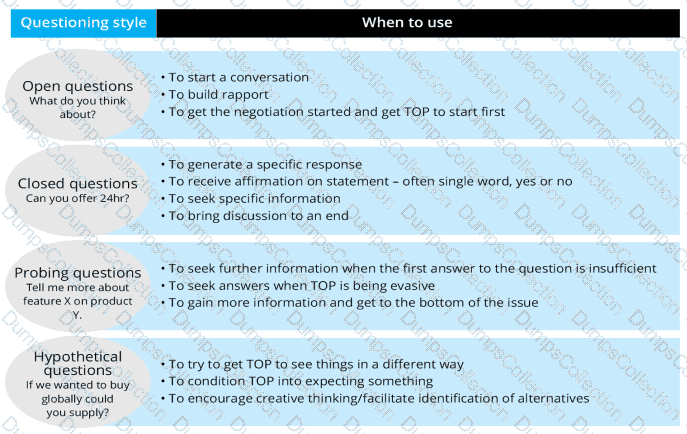
Which type of question should be used to receive affirmation on statement?
Which of the following are internal factors when a supplier is making its pricing decision?
Price elasticity of demand
Environmental legislation
Risk management
The stage in the product life cycle
Which of the following should be the final step of a negotiation process if both parties cannot reach an agreement?

TESTED 17 Oct 2026
 Text Description automatically generated