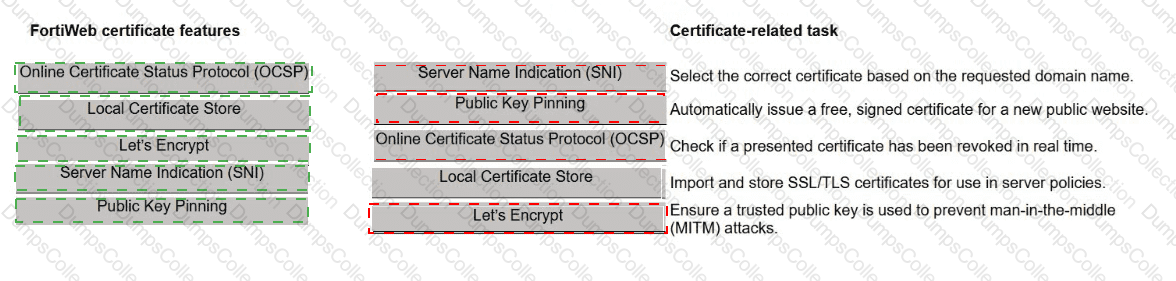
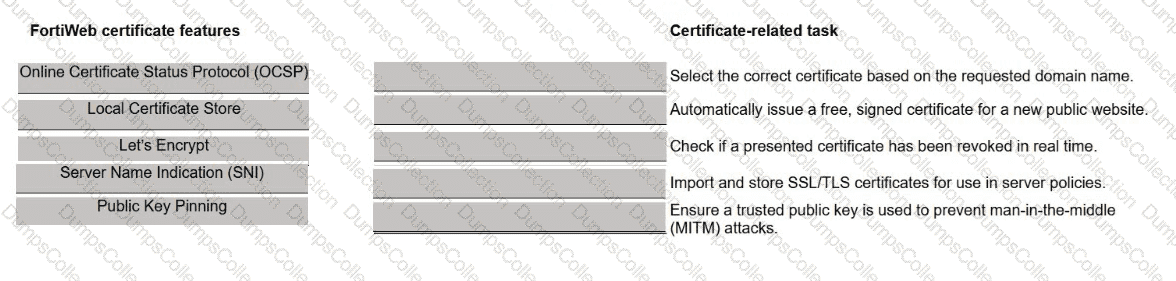
You are working on securing HTTPS communication across different services using FortiWeb. Your task is to configure and validate digital certificates for various traffic and communication needs.
Match each FortiWeb certificate feature to the certificate-related task that supports the feature.
A large enterprise has an existing web infrastructure with complex routing rules and static IP address assignments. The network administrators cannot modify the current IP address scheme, but they need FortiWeb to inspect and block threats like SQL injection and cross-site scripting (XSS) without changing the client-server communication flow.
In this situation, which FortiWeb operation mode is the most suitable?
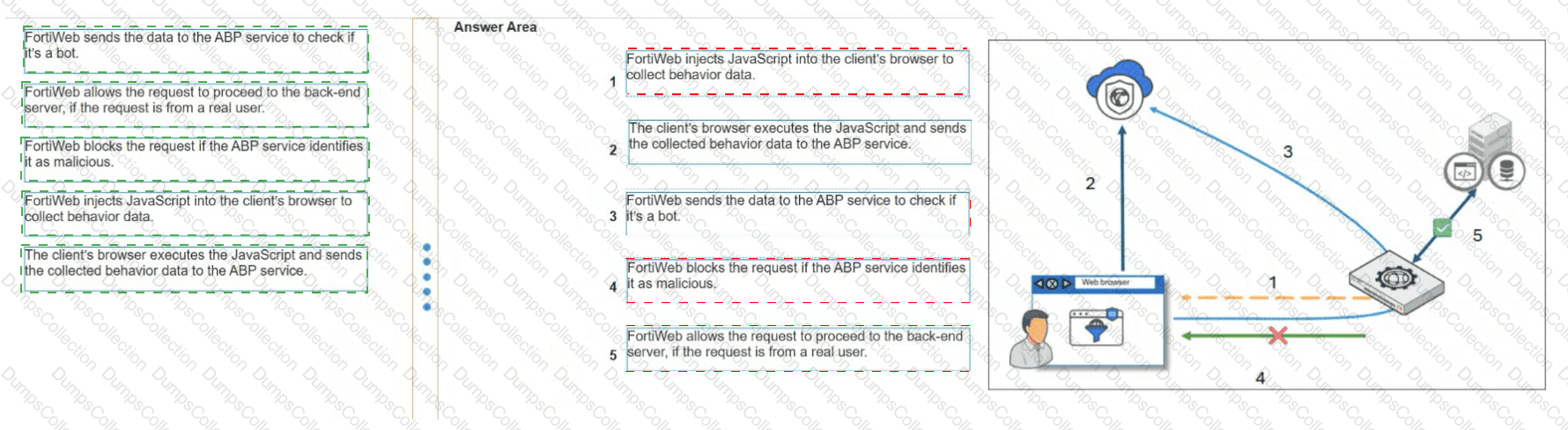
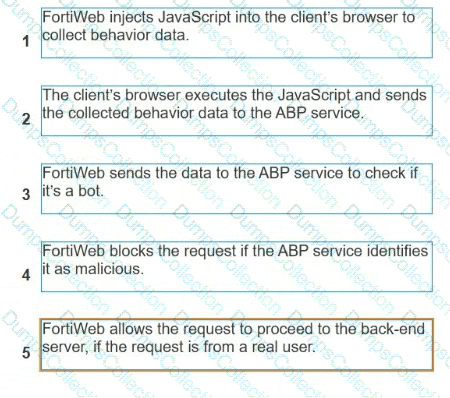
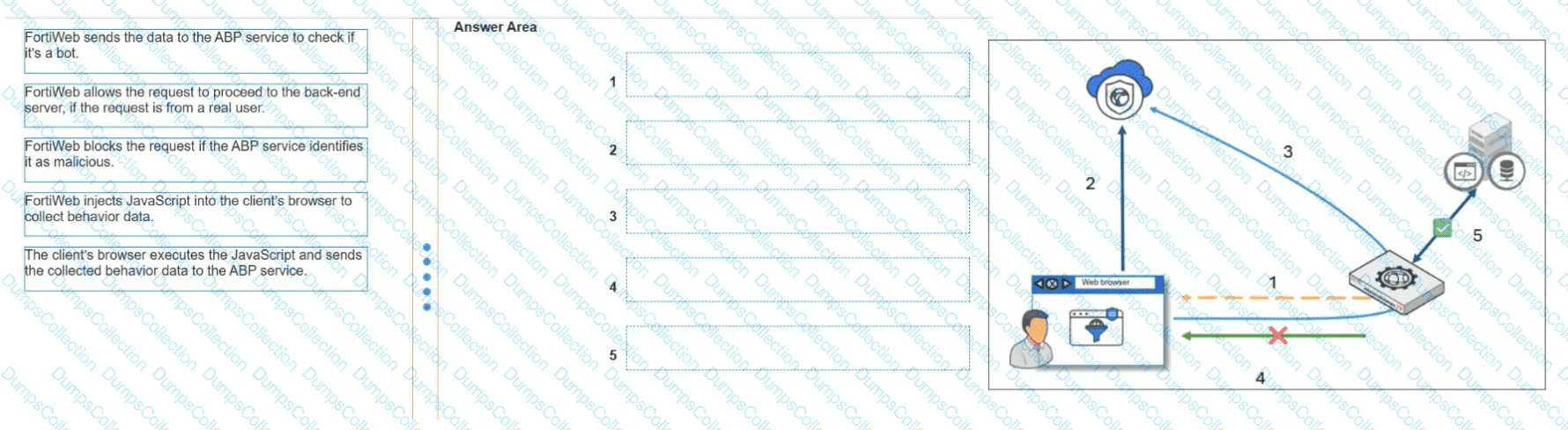
You are reviewing the FortiWeb integration with the Advanced Bot Protection (ABP) service.
Match each step in the ABP flow with its description.
A FortiWeb administrator is deciding between using SAML SSO or HTML authentication. They want to minimize the number of credential prompts users receive across multiple Fortinet services.
Which statement accurately describes which option is best, and why?
Refer to the exhibit.
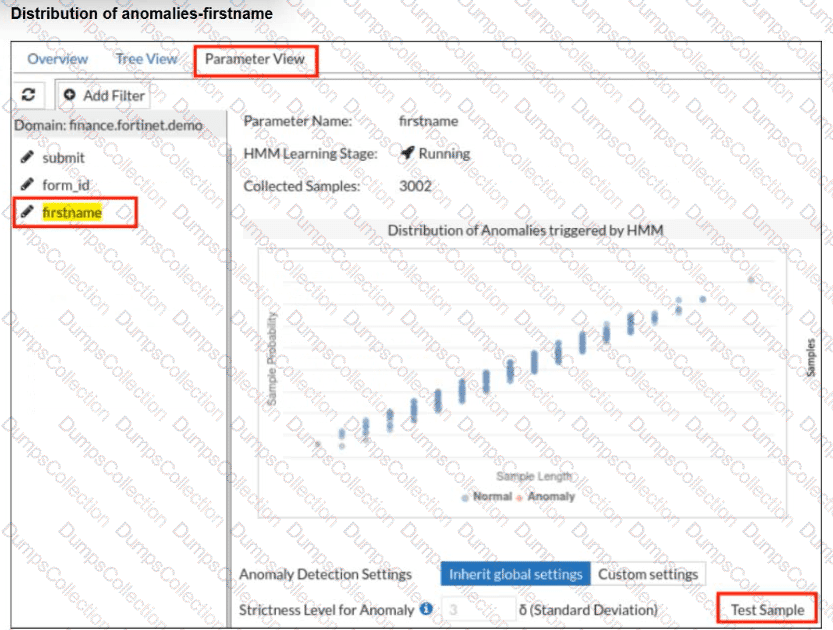
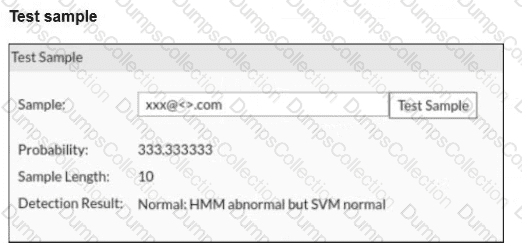
A FortiWeb administrator tests a new form input value after training the machine learning (ML) anomaly detection system.
The hidden Markov model (HMM) flags the input as abnormal, while the support vector machine (SVM) model classifies it as normal. FortiWeb allows the request.
What does this result indicate about the FortiWeb ML anomaly detection behavior?
Refer to the exhibit.
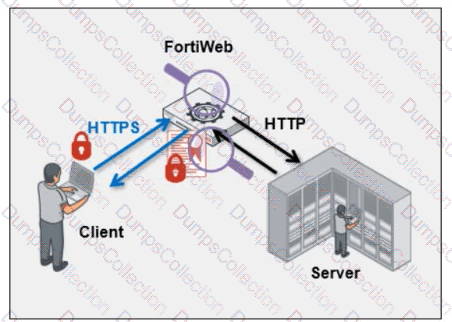
You are configuring SSL offloading on FortiWeb to protect a public-facing application. Clients connect using HTTPS, while FortiWeb forwards requests to the back-end server using HTTP.
You are reviewing certificate deployment and need to decide where to install the private key for the certificate used in client connections.
In this SSL offloading setup, which device is responsible for using the private key associated with the web server certificate?
Refer to the exhibits.
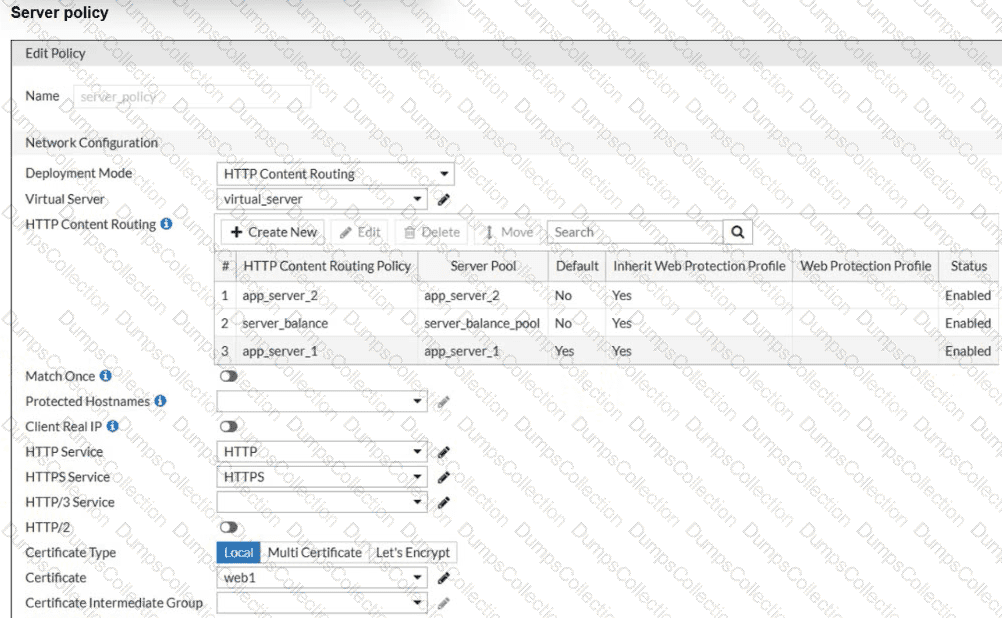
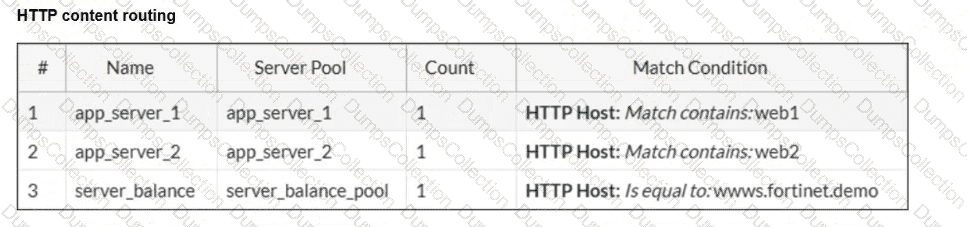
A new domain, https://finance.fortinet.demo, was added but not explicitly mapped. Users report the site loads correctly, but you’re unsure which back-end server is being used.
Why is this request succeeding despite no explicit routing rule for finance.fortinet.demo?
Which situation best explains when a FortiWeb administrator should enable automatic HTTP-to-HTTPS redirection?
While reviewing FortiWeb logs, you notice a suspicious login request that failed authentication. You suspect it may be part of an injection attack targeting the login form.
Which input pattern is an example of a typical SQL injection attempt that could bypass authentication checks?
A FortiWeb administrator sees the following request:
GET /api/v1/data HTTP/1.1
Host: example.com
Authorization: ApiKey abc123def456
The API key belongs to a user in group B who is authorized to access only /api/v1/reports.
What should the administrator do to prevent this unauthorized access?

TESTED 18 Sep 2026