
You've reached the limit of preview questions.
Register now to access more real PMI CAPM exam questions for free!
A risk response strategy in which the project team shifts the impact of a threat, together with ownership of the response, to a third party is called:
mitigate
accept
transfer
avoid
According to the PMBOK® Guide and the Standard for Project Management, the strategy described is Transfer. This is a specific response strategy for Threats (negative risks) where the project team shifts the impact of the threat to a third party, along with the responsibility for responding to it.
As per PMI standards, transferring a threat does not eliminate it; it simply passes the management of the financial or operational impact to another entity. This is most effective for low-probability, high-impact risks and typically involves the payment of a risk premium to the party taking on the risk. Common examples of the Transfer strategy include:
Insurance: Purchasing a policy to cover potential losses.
Performance bonds: A guarantee by a third party to pay if the project fails to meet specific obligations.
Warranties and Guarantees: Shifting the risk of product failure back to the manufacturer or vendor.
Contracts: Using Fixed-Price contracts to transfer the risk of cost overruns to the seller.
The other options are incorrect based on the following PMI definitions for threat responses:
Mitigate: This involves taking action to reduce the probability of occurrence or the impact of a threat. The project team retains ownership of the risk.
Accept: This strategy is used when it is not possible or cost-effective to address a risk. It involves acknowledging the risk and taking no action unless the risk occurs (passive) or establishing a contingency reserve (active).
Avoid: This involves changing the project management plan to eliminate the threat entirely, such as changing the project scope or schedule to bypass a specific hazard.
As per the PMI Lexicon of Project Management Terms, the Transfer strategy is a critical tool for managing uncertainty, particularly when the organization does not have the expertise or financial capacity to handle the potential impact internally.
What is the recommended approach for handling risk in a high-variability environment?
Adaptive
Predictive
Iterative
Incremental
According to the PMBOK® Guide (specifically the 6th and 7th Editions) and the Agile Practice Guide, projects operating in high-variability environments—characterized by rapid change, uncertainty, and complexity—require a specific management approach to handle risk effectively.
Adaptive Approach: In high-variability environments, requirements are often unclear at the start. An Adaptive (Agile) approach is recommended because it uses short cycles (iterations) to tackle work, allowing for frequent review and adaptation.
Risk Mitigation through Transparency: By breaking the work into small increments and involving stakeholders frequently, risks are identified and addressed much earlier than in traditional models. The " fail fast " mentality and constant feedback loops ensure that the project team can pivot if a risk materializes.
On-Demand Planning: Unlike predictive models that plan extensively upfront, adaptive environments use " just-in-time " planning. This ensures that the team is always responding to the most current risk profile rather than following a stale, outdated plan.
Why other options are incorrect:
Option B: Predictive: Also known as Waterfall, this approach works best when requirements are stable and the scope is well-defined. In high-variability environments, a predictive approach is risky because it assumes the future is certain and makes changes difficult and expensive to implement later in the cycle.
Option C: Iterative: While adaptive approaches use iterations, the term " Iterative " specifically refers to a life cycle where the scope is determined early, but time and cost estimates are routinely modified as the team’s understanding of the product increases. It is a component of adaptive work but not the complete " approach " for high-variability risk.
Option D: Incremental: This approach focuses on delivering functional portions of the project in parts. While it helps deliver value early, it doesn ' t necessarily address the high-variability risk of changing requirements as comprehensively as a fully adaptive/agile framework does.
Responsible, accountable, consult and inform (RACI) is an example of which of the following?
Text-oriented formal
Resource management plan
Organization chart
Responsibility assignment matrix (RAM)
According to the PMBOK® Guide (6th Edition), the RACI chart is a common type of Responsibility Assignment Matrix (RAM). A RAM uses a matrix format to show the relationship between work packages (or activities) and project team members.
The RACI model is specifically designed to ensure clear division of roles and responsibilities by using the following four statuses:
Responsible: The person who performs the work.
Accountable: The person ultimately answerable for the correct and thorough completion of the deliverable or task (only one person can be accountable for each task).
Consult: The people whose opinions are sought (two-way communication).
Inform: The people who are kept up-to-date on progress (one-way communication).
Analysis of Distractors:
A (Text-oriented format): These are used for documenting team member responsibilities that require detailed descriptions. Usually in paragraph form, they provide information such as responsibilities, authority, and qualifications. A RACI is a matrix, not text-oriented.
B (Resource management plan): The RACI chart is a component or an output used to help develop the Resource Management Plan, but it is not the plan itself. The plan is the broader document describing how all resources will be acquired and managed.
C (Organization chart): This is a hierarchical graphic display of project team members and their reporting relationships (e.g., an Organizational Breakdown Structure - OBS). It shows who reports to whom, but it does not map individuals to specific work activities like a RAM/RACI does.
Which of the following are an enterprise environmental factor that can influence the Identify Risks process?
Work performance reports
Assumptions logs
Network diagrams
Academic studies
According to the PMBOK® Guide, the Identify Risks process is the process of determining which risks may affect the project and documenting their characteristics. This process is influenced by various external and internal factors known as Enterprise Environmental Factors (EEFs).
Academic Studies: These are considered an external EEF. Industry studies, benchmarking data, and academic research provide a broader context of potential risks that have been identified in similar projects or industries. These studies can alert a project manager to " known-unknowns " that may not be immediately obvious within their specific organizational silo.
Other EEFs for Identify Risks:
Published Materials: Commercial databases, industry checklists, and benchmarking.
Marketplace Conditions: The economic environment or competitor actions.
Organizational Culture: How risk is perceived and tolerated within the company.
Risk Attitudes: The risk appetite and thresholds of stakeholders.
Analysis of Other Options:
A. Work performance reports: These are Project Documents (specifically, an output of Monitor and Control Project Work). While they provide data for risk identification, they are not categorized as " Environmental Factors. "
B. Assumptions logs: This is a Project Document that is created during initiation and updated throughout the project. It is a key input to the Identify Risks process, but it is a document created by the project, not an environmental factor surrounding it.
C. Network diagrams: These are Project Schedule Documents produced during the Sequence Activities process. They help identify risks related to path convergence or dependency logic, but they are internal project artifacts.
An intentional activity to modify a nonconforming product or product component is called:
defect repair
work repair
corrective action
preventive action
According to the PMBOK® Guide, specifically within the Perform Integrated Change Control and Direct and Manage Project Work processes, change requests are categorized into four types. The specific activity described is a defect repair.
Defect Repair: This is a formal, intentional activity to modify a nonconforming product or product component. It addresses a specific failure in quality where the deliverable does not meet the requirements or specifications.
The Change Process: Defect repairs typically result from the Control Quality process, where inspections identify that a result is incorrect. To fix the issue, a change request is issued and processed through the change control system.
Purpose: The goal of defect repair is to bring the nonconforming component into compliance with the original requirements.
Comparison with other options:
B. Work repair: This is not a formal term used in PMI standards; " defect repair " is the specific terminology for nonconforming products.
C. Corrective action: This is an intentional activity that realigns the performance of the project work with the project management plan. While similar, corrective action usually refers to fixing a process or a trend (e.g., getting the schedule back on track) rather than a physical nonconforming product.
D. Preventive action: This is an intentional activity that ensures the future performance of the project work is aligned with the project management plan. It is proactive and happens before a nonconformance occurs.
Which of the following is a tool and technique used to monitor risk?
Technical performance measurement
Cost performance baseline
Benchmarking
Cost of quality
According to the PMBOK® Guide, the Monitor Risks process involves tracking identified risks, monitoring residual risks, identifying new risks, and evaluating risk process effectiveness throughout the project.
Technical Performance Measurement: This is a specific tool and technique used in monitoring risks. It compares technical accomplishments during project execution to the schedule of technical achievement. It requires the definition of objective, quantifiable measures of technical performance (such as weight, transaction processing time, or number of delivered defects).
The " Warning Signal " : If the technical performance is not meeting the plan (e.g., a software module is taking more memory than allocated), it indicates that a risk (such as failing to meet the final technical requirements) may be occurring or is more likely to occur than previously thought.
Other Tools in Monitor Risks:
Data Analysis: Including Reserve Analysis and Trend Analysis.
Audits: To examine the effectiveness of the risk response processes.
Meetings: Specifically Risk Reviews, which should be scheduled regularly.
Analysis of Other Options:
B. Cost performance baseline: This is an Output of the Determine Budget process and serves as an Input to various monitoring and controlling processes. It is a document, not a tool or technique.
C. Benchmarking: This is a tool and technique typically used in Plan Quality Management or Plan Stakeholder Engagement. It involves comparing actual or planned project practices to those of comparable projects to identify best practices and provide a basis for measuring performance.
D. Cost of quality (COQ): This is a tool and technique used in Plan Quality Management to find the total cost of all efforts to achieve product/service quality. While it relates to risk, it is specifically a quality planning tool.
An input of the Plan Procurement Management process is:
Make-or-buy decisions.
Activity cost estimates.
Seller proposals.
Procurement documents.
According to the PMBOK® Guide, specifically the Plan Procurement Management process, the project team identifies which project needs can best be met by acquiring products or services from outside the organization.
Activity Cost Estimates as an Input: To determine whether a component should be purchased or built in-house, the project manager needs to know the expected cost of the work. Activity cost estimates, developed during the Estimate Costs process, provide the baseline for evaluating the reasonableness of bids or proposals submitted by potential sellers.
Linkage to Budget: These estimates help in the Make-or-Buy Analysis by providing the internal cost data required to compare against the market price of external procurement.
Other Key Inputs: Other standard inputs include the Project Charter, Business Documents (Business Case), the Project Management Plan (specifically the Scope Baseline), and Project Documents like the Requirement Documentation and Risk Register.
Comparison with other options:
A. Make-or-buy decisions: This is a primary output of the Plan Procurement Management process. It is the result of the analysis performed during this stage, not the information used to start it.
C. Seller proposals: These are inputs to the Conduct Procurements process. They are received after the procurement documents have been sent out and potential vendors have responded.
D. Procurement documents: These (such as the RFP, RFQ, or IFB) are outputs of the Plan Procurement Management process. they are the documents created to describe the project needs to potential sellers.
Completion of the product scope is measured against the product:
prototypes
requirements
analyses
benchmarks
According to the PMBOK® Guide, a clear distinction is made between Project Scope and Product Scope regarding how completion is measured:
Product Scope: The features and functions that characterize a product, service, or result. Completion of the product scope is measured against the product requirements to ensure that the delivered product has all the specified characteristics and functions.
Project Scope: The work performed to deliver a product, service, or result with the specified features and functions. Completion of the project scope is measured against the project management plan, specifically the scope baseline (which includes the scope statement, WBS, and WBS dictionary).
Validation: During the Validate Scope process, the formalized acceptance of the completed project deliverables is obtained. This involves inspecting the deliverables to ensure they meet the documented requirements and acceptance criteria.
Comparison with other options:
A. Prototypes: These are a tool used in the Collect Requirements process to provide a working model of the expected product. While they help define requirements, they are not the formal metric against which final completion is measured.
C. Analyses: Data analysis is a technique used throughout the project to make decisions or identify trends, but it is not the baseline for scope completion.
D. Benchmarks: Benchmarking involves comparing actual or planned practices to those of comparable organizations to identify best practices or provide a basis for measuring performance. It helps set the standard for requirements but is not the requirements document itself.
Which tool or technique is used in the Develop Project Management Plan process?
Pareto diagram
Performance reporting
SWOT analysis
Expert judgment
According to the PMBOK® Guide and the Standard for Project Management, specifically within the Project Integration Management Knowledge Area, Expert Judgment is a primary tool and technique used in the Develop Project Management Plan process.
As per PMI standards, Develop Project Management Plan is the process of defining, preparing, and coordinating all plan components and consolidating them into an integrated project management plan. Expert Judgment is defined as judgment provided based upon expertise in an application area, Knowledge Area, discipline, industry, etc., as appropriate for the activity being performed. In this specific process, expert judgment is used to:
Tailor the Process: Determine which processes from the PMBOK® Guide are appropriate for the specific project.
Develop Technical Details: Provide expertise on the technical and management details to be included in the plan.
Determine Resources: Assist in determining the resources and skill levels needed to perform project work.
Define Management Levels: Establish the level of configuration management and change control to be applied to the project.
The other options are incorrect based on their specific placement within the PMI framework:
Pareto diagram: This is a Quality Management tool (a vertical bar chart) used in the Manage Quality and Control Quality processes to identify the vital few sources that are responsible for causing the most causes of effects.
Performance reporting: This is part of the Monitor and Control Project Work and Manage Communications processes. It involves collecting and distributing performance information, including status reports and progress measurements, rather than planning how the project will be managed.
SWOT analysis: As seen in previous questions, this is a tool used in the Identify Risks process to identify strengths, weaknesses, opportunities, and threats.
Expert Judgment is also used in many other processes (like Develop Project Charter or Define Scope), but among the choices provided, it is the only one listed as an official tool/technique for the Develop Project Management Plan process.
As per the PMI Lexicon of Project Management Terms, Expert Judgment ensures that the Project Management Plan is realistic, comprehensive, and based on proven organizational or industry practices.
When addressing roles and responsibilities,which item ensures that the staff has the skills required to complete project activities?
Authority
Role
Competency
Responsibility
According to the PMBOK® Guide, specifically within the Plan Resource Management process, defining roles and responsibilities is a critical step in ensuring the project team is equipped for success. The specific attribute that addresses the skills and capacities of the team is Competency.
In a professional project management context, roles and responsibilities are broken down into four key components:
Role: The label describing the portion of a project for which a person is accountable (e.g., Civil Engineer, Business Analyst, or Tester).
Authority: The right to apply project resources, make decisions, sign approvals, or accept deliverables.
Responsibility: The assigned duties and work that a project team member is expected to perform.
Competency: The skill and capacity required to complete project activities. If a team member does not possess the required competencies, project performance can be jeopardized.
A. Authority: This refers to the power granted to an individual to make decisions or use resources. While a person may have the authority to act, it does not guarantee they have the technical skills (competency) to do the work correctly.
B. Role: This is simply a title or designation. It describes who someone is in the project hierarchy, not their specific level of skill or ability.
D. Responsibility: This is the obligation to perform the work. A person can be responsible for a task but still lack the underlying competency needed to execute it to the required quality standards.
In PMI standards, if the team members do not have the required competencies, the project manager is responsible for initiating proactive responses, such as:
Training: To develop the necessary skills.
Hiring/Acquisition: Bringing in experts who already possess the competency.
Schedule/Scope Adjustments: Adjusting the project to align with the available skill sets of the current team.
What prototyping technique shows a sequence or navigations through a series of images or illustrations?
Storyboarding
Wireframes
Data simulation
Report prototyping
In the PMBOK® Guide and the PMI Guide to Business Analysis, prototyping is a method of obtaining early feedback on requirements by providing a working model of the expected product before actually building it.
Why Choice A is correct:
Visual Sequence: Storyboarding is a prototyping technique that uses a sequence of images or illustrations to show how a user would navigate through a system or how a business process flows.
UX and Flow: It is particularly effective for explaining the " user journey. " Instead of showing a single static screen, it shows the progression (Step 1 - > Step 2 - > Step 3), making it easier for stakeholders to visualize the logic and transitions of the solution.
Low Fidelity: It is often a low-fidelity technique (hand-drawn or simple digital sketches), which allows for quick changes and iterative feedback without a heavy investment in coding.
Analysis of other options:
B (Wireframes): While wireframes are a type of prototype, they usually represent a single static page or screen layout. They show the structural elements (buttons, text boxes, headers) but do not inherently show a " sequence or navigation " unless they are linked together in a more advanced interactive prototype.
C (Data simulation): This is a technical technique used to test how a system handles specific data inputs or volumes. It does not use images or illustrations to show a user interface or navigation flow.
D (Report prototyping): This focuses specifically on the layout, data fields, and formatting of an output document (like a PDF or Dashboard report). It does not show a navigational sequence through a software application.
Key Concept: The Project Management Institute (PMI) emphasizes that Storyboarding (Choice A) is a powerful communication tool. By showing the navigation through a series of images, the project team can identify gaps in logic or " dead ends " in the user experience early in the requirements phase, preventing costly rework during the development phase.
The project manager is new to the company in order to effectively manage the project, which components of the organizational governance framework does the project manager need to take into account?
Organizational structure type, Key stakeholders, and protect funds
Rules. policies and norms
Project management software, resources availability and risk checklist
Governance elements, team policies, and organizational goals
According to the PMBOK® Guide, when a project manager is operating within an organization, they must align their project’s governance with the broader organizational governance framework. Governance refers to the framework within which authority is exercised in organizations.
Rules, Policies, and Norms: These are the fundamental components of governance. Rules provide the legal and regulatory boundaries; Policies are the internal principles or rules of the organization (such as procurement policies or HR policies); and Norms are the unwritten cultural standards and behaviors that govern how work gets done.
Consistency: The project manager must ensure that the project’s governance (e.g., how decisions are made, how risks are escalated) does not conflict with these organizational-level components. For a new project manager, understanding these is crucial to navigating the company’s internal environment without causing friction.
Governance Framework: This framework influences how the project objectives are set and achieved, how risk is monitored and assessed, and how performance is optimized.
Why other options are incorrect:
Option A: While organizational structure and stakeholders are important, they are categorized more broadly as Enterprise Environmental Factors (EEFs) or specific project actors. " Protect funds " is a financial responsibility, not a component of a governance framework.
Option C: Project management software, resource availability, and risk checklists are examples of EEFs and Organizational Process Assets (OPAs). They are tools and data used by the project manager, but they do not constitute the governance framework itself.
Option D: While Governance elements and organizational goals are relevant, " team policies " are usually specific to the project (found in the Team Charter) rather than the overarching organizational governance framework that a new project manager must first adapt to.
Which process determines the risks that may affect the project and documents their characteristics?
Control Risks
Plan Risk Management
Plan Risk Responses
Identify Risks
According to the PMBOK® Guide and the Standard for Project Management, the process of determining which risks may affect the project and documenting their characteristics is Identify Risks.
As per PMI standards, this process is part of the Project Risk Management Knowledge Area and occurs within the Planning Process Group. The key benefit of this process is the documentation of existing risks and the knowledge and ability it provides to the project team to anticipate events. Important aspects of this process include:
Iterative Nature: Identify Risks is an iterative process because new risks may evolve or become known as the project progresses through its life cycle.
Participants: The process should involve the project manager, project team members, risk management team (if assigned), customers, subject matter experts, end users, and other stakeholders.
Risk Register: The primary output of this process is the Risk Register, which initially contains the list of identified risks and a list of potential responses.
The other options are incorrect based on the following PMI definitions:
Control Risks: (Now referred to as Monitor Risks) This is the process of monitoring the implementation of agreed-upon risk response plans, tracking identified risks, and identifying and analyzing new risks. It is a Monitoring and Controlling process, not the initial identification process.
Plan Risk Management: This is the process of defining how to conduct risk management activities for a project. It establishes the " roadmap " or strategy but does not identify the specific risks themselves.
Plan Risk Responses: This is the process of developing options and actions to enhance opportunities and to reduce threats to project objectives. This happens after risks have been identified and analyzed.
As per the PMI Lexicon of Project Management Terms, the Identify Risks process ensures that the team has a comprehensive understanding of the uncertainties that could impact the project ' s scope, schedule, cost, or quality.
Which process involves subdividing project deliverables and project work into smaller, more manageable portions?
Develop Schedule
Create VVBS
Estimate Activity Resources
Define Scope
In accordance with the PMBOK® Guide (Project Scope Management), the process of Create WBS (Work Breakdown Structure) is the process of subdividing project deliverables and project work into smaller, more manageable components.
The key technique used in this process is Decomposition. This involves breaking down the project scope and project deliverables into smaller, more functional parts until the work is defined at the Work Package level.
Work Package: This is the lowest level of the WBS and is the point at which cost and duration can be reliably estimated and managed.
Purpose: It provides a structured vision of what has to be delivered. It organizes and defines the total scope of the project and represents the work specified in the current approved version of the project scope statement.
Output: The primary output of this process is the Scope Baseline, which includes the approved version of the scope statement, the WBS, and the associated WBS dictionary.
Analysis of Distractors:
A. Develop Schedule: This is the process of analyzing activity sequences, durations, resource requirements, and schedule constraints to create the project schedule model. It uses the work packages defined in the WBS but does not create them.
C. Estimate Activity Resources: This process involves estimating the team resources and the type and quantities of materials, equipment, and supplies necessary to perform project work.
D. Define Scope: This is the process of developing a detailed description of the project and product. While it defines what will be done, the Create WBS process is the specific step where that scope is subdivided into manageable portions.
Which type of probability distribution is used to represent uncertain events such as the outcome of a test or a possible scenario in a decision tree?
Uniform
Continuous
Discrete
Linear
According to the PMBOK® Guide (Project Management Body of Knowledge), specifically within the Project Risk Management knowledge area and the Perform Quantitative Risk Analysis process, project managers use various probability distributions to model uncertainty.
Discrete Distribution (Option C): This type of distribution is used to represent uncertain events where there are a finite number of possible outcomes. Examples provided by PMI include the outcome of a test (pass/fail), the occurrence of a specific risk event (yes/no), or different branches in a Decision Tree Analysis. Because these events have specific, countable results rather than a range of infinite values, they are categorized as discrete.
Continuous Distribution (Option B): These are used to represent values that can occur anywhere within a range, such as the duration of an activity or the cost of a work package. Common examples in project management include Beta and Triangular distributions (used in PERT).
Uniform Distribution (Option A): This is a specific type of continuous distribution where every value within a range has an equal probability of occurring. It is typically used when there is no clear tendency for a value to fall in the middle of a range (unlike a Normal or Beta distribution).
Linear (Option D): While " linear " describes a relationship between variables (like a straight line on a graph), it is not a standard probability distribution used for modeling uncertain events or decision tree scenarios in the PMI framework.
In the PMI framework, selecting the correct distribution is vital for the accuracy of a Monte Carlo simulation or a Decision Tree, ensuring that the quantitative analysis reflects the true nature of the project risks.
Which is an output of the Collect Requirements process?
Requirements traceability matrix
Project scope statement
WBS dictionary
Work performance measurements
Comprehensive and Detailed Explanation with all Project Management documents: = According to the PMBOK® Guide, the Collect Requirements process is the process of determining, documenting, and managing stakeholder needs and requirements to meet project objectives.
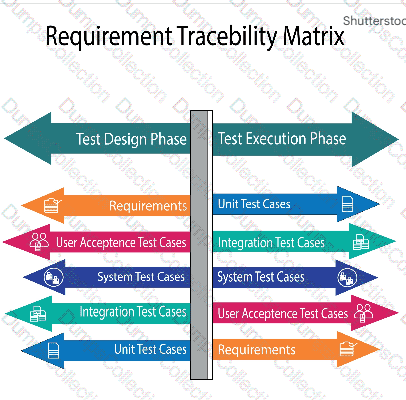
Requirements Traceability Matrix (RTM): This is a primary output of this process. It is a grid that links product requirements from their origin to the deliverables that satisfy them. It ensures that each requirement adds business value by linking it to the business and project objectives and provides a means to track requirements throughout the project life cycle.
Requirements Documentation: This is the other major output, which describes how individual requirements meet the business need for the project.
The Importance of the RTM: It helps ensure that requirements approved in the requirements documentation are delivered at the end of the project and that they are not " lost " during the execution and testing phases.
Analysis of Other Options:
B. Project scope statement: This is the primary output of the Define Scope process, not Collect Requirements. While requirements are an input to defining scope, the formal statement is produced later.
C. WBS dictionary: This is an output of the Create WBS process. It provides detailed information about the work packages after the scope has already been defined and decomposed.
D. Work performance measurements: These are typically associated with the Control processes (like Control Schedule or Control Costs). In the Collect Requirements phase, which is part of Planning, no actual work has been performed yet to measure.
A project manager is assigned to a strategic project Senior management asks the project manager to give a presentation in order to request support that will ensure the success of the project.
Which entities will the project manager attempt to influence?
The project and the organization
The organization and the industry
The subject matter experts and the project
The change control board and the organization
According to the PMBOK® Guide (7th Edition) and the Standard for Project Management, one of the key leadership roles of a project manager is to exert influence across various spheres to ensure project success. When senior management requests a presentation to secure support, the project manager is operating within the " Sphere of Influence. "
The project manager ' s influence is categorized as follows:
The Project: The project manager leads the project team to meet project objectives and satisfy stakeholder needs. This involves managing internal resources, communication, and team dynamics.
The Organization: Project managers must proactively interact with other project managers and functional managers within the organization. Influencing the organization is critical for securing resources, advocating for the project ' s strategic value, and ensuring alignment with organizational goals.
Analysis of Distractors:
B (Industry): While project managers stay informed about industry trends, they rarely have the direct objective to " influence the industry " in order to secure support for a specific internal strategic project.
C (Subject Matter Experts and the Project): Subject Matter Experts (SMEs) are considered part of the project team or stakeholders within the project/organization sphere. This option is too narrow and misses the broader organizational support requested by senior management.
D (Change Control Board and the Organization): The Change Control Board (CCB) is a specific governance body. While important, the request for support to " ensure success " of a strategic project typically involves broader organizational influence (such as resource owners and executive sponsors) rather than just the board that approves scope changes.
What is the project manager ' s responsibility in Project Integration Management?
Ensuring that requirements-related work is clarified in the project management plan
Investing sufficient effort in acquiring, managing, motivating, and empowering the project team
Combining the results in all other knowledge areas, and overseeing the project as a whole
Developing a strategy to ensure effective stakeholder communication
According to the PMBOK® Guide (6th and 7th Editions), Project Integration Management is the core responsibility of the project manager. While other knowledge areas (like Scope, Schedule, or Cost) can be managed by specialists or functional leads, Integration cannot be delegated. It is the specific function where the project manager acts as the " integrator " of the project.
Key responsibilities within this domain include:
Unification and Consolidation: The project manager must pull together the outputs of all other Knowledge Areas (the subsidiary plans) to create a cohesive Project Management Plan.
Managing Interdependencies: Overseeing how a change in one area (e.g., a scope increase) impacts other areas (e.g., budget and schedule).
Resource and Objective Alignment: Ensuring that all project activities are aligned with the overall strategic goals and the Project Charter.
Balancing Competing Constraints: Making trade-offs among competing objectives and alternatives to ensure the project as a whole is successful.
Analysis of Distractors:
A (Requirements): This is the primary focus of Project Scope Management. While requirements are eventually integrated, clarifying them is a specialized task within the Scope domain.
B (Team Motivation): This is the primary focus of Project Resource Management. While vital, it describes the " people " side of management rather than the " integration " of the project ' s technical and administrative components.
D (Stakeholder Communication): This is the primary focus of Project Management. Like the other distractors, this is a specialized area that feeds into Integration but does not define the overarching integrative role of the project manager.
Which of the following technology platforms is most effective for sharing information when managing virtual project teams?
Video conferencing
Audio conferencing
Shared portal
Email/chat
According to the PMBOK® Guide (6th and 7th Editions), managing virtual project teams requires a focus on centralizing project information to maintain a " single source of truth. " While all the listed tools facilitate communication, a Shared Portal (such as a project site, intranet, or cloud-based document management system) is considered the most effective for sharing information.
Why a Shared Portal is the most effective:
Asynchronous Access: Virtual teams often operate in different time zones. A shared portal allows team members to access the most recent documents, schedules, and requirements at any time without needing the sender to be online.
Information Integrity: It prevents version control issues that commonly occur with email or chat, ensuring everyone is working from the same " verified " artifacts.
Knowledge Management: It acts as a repository for Organizational Process Assets (OPAs) and project-specific documentation, supporting the Manage Project Knowledge process.
Analysis of Distractors:
A and B (Video/Audio Conferencing): These are excellent for collaboration and real-time discussion (synchronous communication), but they are less effective for sharing and storing information. Once the call ends, the information is gone unless recorded and manually shared elsewhere.
D (Email/chat): While useful for quick updates, email and chat often lead to " information silos " where critical data is buried in long threads or private conversations, making it difficult for the entire virtual team to find and use information consistently.
Key Concept: In the context of Project Communications Management, the project manager must select the right Communication Technology. For virtual teams, the emphasis is on centralization and accessibility, which is best provided by a shared workspace or portal.
Which Develop Schedule tool and technique produces a theoretical early start date and late start date?
Critical path method
Variance analysis
Schedule compression
Schedule comparison bar charts
According to the PMBOK® Guide, specifically within the Develop Schedule process, the Critical Path Method (CPM) is the primary analytical tool used to calculate the theoretical start and finish dates for all activities.
Mechanism: The Critical Path Method performs a Forward Pass and a Backward Pass through the project schedule network diagram.
Forward Pass: Determines the Early Start (ES) and Early Finish (EF) dates for each activity by calculating from the project start date.
Backward Pass: Determines the Late Start (LS) and Late Finish (LF) dates by calculating from the project finish date.
Purpose: By comparing these dates, the tool identifies the Total Float (LS - ES or LF - EF) for each activity. Activities with zero total float are on the Critical Path, which represents the longest path through the project and determines the shortest possible project duration.
Theoretical Nature: These dates are considered " theoretical " because they do not account for resource limitations; they are based solely on logic, durations, and constraints. Resource leveling is typically applied after this analysis to create a realistic schedule.
Choice B (Variance analysis): This is a tool used in Control Schedule to compare actual progress against the baseline, not to generate theoretical start/late dates.
Choice C (Schedule compression): These techniques (Crashing and Fast Tracking) are used to shorten the schedule duration, often after the initial critical path has been identified.
Choice D (Schedule comparison bar charts): These are used to visualize the difference between two versions of a schedule (e.g., baseline vs. current), not to calculate the ES/LS dates.
A logical relationship in which a successor activity cannot start until a predecessor activity has finished is known as:
Start-to-start (SS).
Start-to-finish (SF).
Finish-to-start (FS).
Finish-to-finish (FF).
In accordance with the PMBOK® Guide (Project Schedule Management), specifically regarding the Precedence Diagramming Method (PDM), there are four types of logical relationships or dependencies used to sequence activities.
The Finish-to-start (FS) relationship is defined as:
Definition: A logical relationship in which a successor activity cannot start until a predecessor activity has finished.
Usage: This is the most commonly used logical relationship in project scheduling.
Example: In a construction project, the activity " Level Concrete " (Successor) cannot start until the activity " Pour Concrete " (Predecessor) has finished.
Analysis of Distractors:
A. Start-to-start (SS): A logical relationship in which a successor activity cannot start until a predecessor activity has started. (e.g., Leveling concrete cannot start until pouring concrete has started).
B. Start-to-finish (SF): A logical relationship in which a successor activity cannot finish until a predecessor activity has started. This is the rarest type of relationship used in project management.
D. Finish-to-finish (FF): A logical relationship in which a successor activity cannot finish until a predecessor activity has finished. (e.g., Writing a document must be finished before the editing of that document can be finished).
Which tool should a project manager use to calculate cost variance for a project?
Contingency analysis
Review lessons learned from similar projects
Expert judgment
Actual cost
According to the PMBOK® Guide, specifically the Control Costs process, Earned Value Analysis (EVA) is the standard method used to assess project performance and progress.
Why Choice D is correct: To calculate Cost Variance (CV), you must have the Actual Cost (AC).
The Formula: Cost Variance is calculated using the formula:
$$CV = EV - AC$$
Components:
EV (Earned Value): The value of the work actually performed expressed in terms of the approved budget.
AC (Actual Cost): The total cost actually incurred and recorded in accomplishing work performed for an activity or WBS component.
Significance: You cannot determine if you are over or under budget without knowing exactly how much money has been spent (Actual Cost). A positive CV indicates the project is under budget, while a negative CV indicates it is over budget.
Analysis of other options:
A (Contingency analysis): This is used to determine the amount of management or contingency reserves needed for a project based on risk. It is a planning and risk management tool, not a performance measurement tool for calculating current variance.
B (Review lessons learned): Historical data from similar projects is used during the Estimate Costs phase (Analogous Estimating). While it helps in setting the baseline, it cannot be used to calculate the real-time variance of the current project ' s spending.
C (Expert judgment): While expert judgment is a tool and technique for almost every process, it is used to interpret data or make estimates. Calculating variance is a mathematical exercise requiring specific data points (EV and AC) rather than an opinion-based assessment.
Key Concept:
The Project Management Institute (PMI) emphasizes that Actual Cost (AC) (Choice D) is one of the three fundamental data points (along with Planned Value and Earned Value) required for Earned Value Management. Without capturing the actual spend, a project manager lacks the " reality " component needed to measure financial performance against the Cost Baseline.
A project manager providing information to the right audience, in the right format, at the right time is an example of which type of communication?
Efficient
Effective
Push
Pull
According to the PMBOK® Guide, specifically within the Project Communications Management knowledge area, PMI distinguishes between two fundamental dimensions of successful communication: Effectiveness and Efficiency.
Effective Communication: This is defined as providing the information in the right format, at the right time, to the right audience, and with the right impact. The focus is on the quality and relevance of the communication to ensure the message is understood and achieves its intended purpose.
Efficient Communication: This refers to providing only the information that is needed. The focus here is on minimizing the waste of resources (such as time or budget) by avoiding " information overload " or sending unnecessary data.
Why the other options are incorrect:
A. Efficient: While a project manager should strive to be efficient, efficiency is about the quantity and resource usage (providing " only " what is needed). The specific criteria mentioned in the question (right audience, format, and time) are the literal definition of " Effective " communication in PMI standards.
C. Push: This is a Communication Method where information is sent to specific recipients who need to receive the information (e.g., emails, memos, reports). It does not guarantee that the information reached the right audience at the right time in the right format.
D. Pull: This is a Communication Method used for very large volumes of information or very large audiences. It requires the recipients to access the communication content at their own discretion (e.g., intranet sites, e-learning, lessons learned databases). Like push communication, it is a method, not a qualitative description like " effective. "
Which of the following is a tool and technique used in the Develop Schedule process?
Three-point estimates
Resource leveling
Precedence diagramming method
Bottom-up estimating
According to the PMBOK® Guide, the Develop Schedule process is the process of analyzing activity sequences, durations, resource requirements, and schedule constraints to create the project schedule model. Resource leveling is a specific tool and technique categorized under Resource Optimization.
Resource leveling is a technique in which start and finish dates are adjusted based on resource constraints with the goal of balancing the demand for resources with the available supply.
Scenario: It is used when shared or critical required resources are available only at certain times or in limited quantities, or when they have been over-allocated.
Impact: Unlike resource smoothing, resource leveling can often cause the original critical path to change, usually by increasing the project duration.
A. Three-point estimates: This is a tool and technique used in the Estimate Activity Durations process. While it provides the data used to build a schedule, the act of developing the schedule itself uses those durations as inputs.
C. Precedence diagramming method (PDM): This is a tool and technique used in the Sequence Activities process. PDM is used to create the project schedule network diagram by showing the logical relationships between activities.
D. Bottom-up estimating: This is a tool and technique used in Estimate Activity Resources and Estimate Costs. It involves estimating the components of work and then aggregating them to reach a total.
To build a robust schedule, a Project Manager also uses:
Critical Path Method (CPM): To identify the sequence of activities that represents the longest path.
Schedule Compression: Including Crashing (adding resources) and Fast Tracking (performing activities in parallel).
Leads and Lags: Adjusting the timing between successor and predecessor activities.
What-If Scenario Analysis: Using simulation (like Monte Carlo) to see how different variables affect the deadline.
A project team is tasked with decomposing the scope to enable detailed cost and duration estimates. What should the team do to achieve this requirement?
Prepare a WBS with task sequencing and detail the duration and cost estimates.
Prepare a WBS to work package level to effectively manage duration and cost estimates.
Prepare a WBS for immediate tasks in the plan to work package level for duration and cost estimates.
Prepare a work breakdown structure (WBS) to include each deliverable with a target duration and cost estimate.
According to the PMBOK® Guide, specifically the Create WBS process, decomposition is the technique used for dividing and subdividing the project scope and project deliverables into smaller, more manageable parts.
Why Choice B is correct:
The Work Package: The lowest level of the WBS is the Work Package. By definition in PMI standards, a work package is the point at which cost and duration can be reliably estimated and managed.
Hierarchical Structure: A WBS is a deliverable-oriented hierarchical decomposition of the total scope of work. It does not include actions or dependencies (that happens in the activity list), but it provides the framework for all subsequent planning.
Control Accounts: Work packages are often grouped into control accounts for performance measurement. Without decomposing to the work package level, estimates remain high-level and prone to significant error.
Analysis of other options:
A (WBS with task sequencing): This is a common misconception. A WBS is a hierarchical decomposition of deliverables, not a chronological list of tasks. Sequencing occurs during the Develop Schedule process, not during the creation of the WBS.
C (WBS for immediate tasks only): This describes Rolling Wave Planning. While useful in some contexts, the question asks how to decompose the scope to enable detailed estimates for the project. Restricting the WBS to only " immediate " tasks would prevent the team from creating a complete baseline for the entire project scope.
D (WBS with target duration and cost): While a WBS provides the basis for these estimates, the WBS itself is a scope document. The duration and cost data are typically captured in the WBS Dictionary or the project schedule/budget, not as a label for every deliverable within the WBS graphic.
Key Concept: The Project Management Institute (PMI) emphasizes that " if it ' s not in the WBS, it ' s not in the project. " By decomposing the project to the Work Package level (Choice B), the project manager creates a " baseline " that allows for the Bottom-Up Estimating technique, which is the most accurate way to determine the project ' s total cost and duration.
Status of deliverables, implementation status for change requests, and forecasted estimates to complete are examples of:
Earned value management.
Enterprise environmental factors.
Organizational process assets.
Work performance information.
In accordance with the PMBOK® Guide (Project Integration Management) and the Monitoring and Controlling Process Group, project data is transformed into information and reports through a specific hierarchy. Work performance information consists of the performance data collected from various controlling processes, analyzed in context, and integrated based on relationships across areas.
Contextual Analysis: While " Work Performance Data " is the raw observation (e.g., " the cost is $100 " ), Work Performance Information is the result of comparing that data against the project management plan (e.g., " the cost is $100, which is $20 over the baseline " ).
Examples in Practice:
Status of Deliverables: Knowing if a deliverable is started, in progress, or completed relative to the schedule.
Implementation Status for Change Requests: Tracking which approved changes have been successfully integrated into the project.
Forecasted Estimates: Calculated values such as Estimate to Complete (ETC) and Estimate at Completion (EAC) which predict future performance based on current trends.
Data Flow: Work Performance Data (Input) $\rightarrow$ Data Analysis (Tool) $\rightarrow$ Work Performance Information (Output) $\rightarrow$ Work Performance Reports (Output of Monitor and Control Project Work).
Analysis of Distractors:
A. Earned value management: This is a specific methodology or tool used to generate work performance information (like CV, SV, CPI, and SPI). It is the calculation method, not the category of the items listed.
B. Enterprise environmental factors: These are internal or external factors, not under the control of the project team, that influence, constrain, or direct the project (e.g., marketplace conditions or organizational culture).
C. Organizational process assets: These are the plans, processes, policies, procedures, and knowledge bases specific to and used by the performing organization (e.g., templates or lessons learned). While status reports might eventually become OPAs, the active status and forecasts during the project are categorized as performance information.
Which quality management and control tool is useful in visualizing parent-to-child relationships in any decomposition hierarchy that uses a systematic set of rules that define a nesting relationship?
Interrelationship digraphs
Tree diagram
Affinity diagram
Network diagram
According to the PMBOK® Guide, specifically within the Manage Quality process (formerly Perform Quality Control/Assurance), Tree Diagrams are one of the " Quality Management and Control Tools " used to visualize data and relationships.
Decomposition Hierarchy: A tree diagram is used to represent a hierarchy of tasks or relationships. It is particularly useful for visualizing parent-to-child relationships in any decomposition hierarchy (such as the Work Breakdown Structure (WBS), Resource Breakdown Structure (RBS), or Organizational Breakdown Structure (OBS)).
Nesting Relationships: The tool uses a systematic set of rules to define how one element " nests " or sits within another. It starts with a single root (the parent) and branches out into multiple levels of detail (the children), ensuring that the horizontal or vertical flow represents the logic of the decomposition.
Application in Quality: In a quality context, tree diagrams can be used to link high-level quality goals to the specific, granular activities required to achieve them, or to map out the potential results of a decision-making process (such as a decision tree).
Why the other options are incorrect:
A. Interrelationship digraphs: These are used to identify complex underlying causes or relationships in a problem. They show " many-to-many " relationships rather than a strict, nested parent-to-child hierarchy.
C. Affinity diagram: This is a grouping technique used to organize large numbers of ideas or " post-it notes " into logical categories. It is used for brainstorming and sorting ideas rather than formal hierarchical decomposition.
D. Network diagram: This is primarily a Schedule Management tool used to show the logical sequence and dependencies (Finish-to-Start, etc.) between project activities. It shows the " flow " of time and logic, not a " nested " parent-to-child hierarchy.
What specific quality considerations should be examined while completing Quality Management plan?
Risk registerB Stakeholder engagement
Continuous improvement
Standards and regulatory compliance
According to the PMBOK® Guide, the Plan Quality Management process involves identifying quality requirements and/or standards for the project and its deliverables, and documenting how the project will demonstrate compliance with these quality requirements.
Standards and Regulatory Compliance: This is a fundamental consideration because every project operates within a specific environment that may have legal, industry, or organizational standards.
Standards: These can be internal (company-wide quality levels) or external (ISO standards, IEEE, etc.).
Regulatory Compliance: This involves mandatory laws or regulations that the project ' s product must adhere to. Failure to examine these during the planning phase can lead to significant rework, legal issues, or project failure.
Impact on the Plan: By examining these considerations early, the project manager defines the " Quality Metrics " and " Quality Checklists " that will be used during the Control Quality process.
Analysis of other options:
Risk register / Stakeholder engagement (Option A): While these are inputs to the Plan Quality Management process (the risk register contains threats that may impact quality, and stakeholders define the quality requirements), they are not the quality considerations themselves that define the plan ' s criteria.
Continuous improvement (Option B): Also known as Kaizen, this is an overarching philosophy or a technique used within the Manage Quality process. While important, the specific considerations used to build the plan focus on the requirements and rules the project must follow (standards/compliance).
Per PMI standards, ensuring Standards and regulatory compliance is part of the " Cost of Quality " (specifically, the Cost of Conformance), ensuring the project avoids the high costs associated with non-conformance and failure.
What does the creation of a project management plan accomplish?
Defines the basis of all project work and how it will be performed
Acknowledges the existence of a project and defines its high-level information
Authorizes the project manager to apply organizational resources to project activities
Provides the project manager with organizational standards, policies, processes, and procedures
According to the PMBOK® Guide, the Project Management Plan is the primary document used to manage the project. It is a single, formal, approved document that defines how the project is executed, monitored, controlled, and closed.
Basis of All Work: The plan integrates and consolidates all subsidiary management plans and baselines (Scope, Schedule, Cost) into a cohesive whole. It acts as the " source of truth " for the team, ensuring everyone understands the methodology, the work to be done, and the processes for handling changes.
Execution and Performance: It doesn ' t just list what is being built; it explains how the project will be managed. This includes communication protocols, risk management strategies, and quality standards.
Living Document: While it is baselined, it is also progressively elaborated throughout the project life cycle, meaning it is updated as more information becomes available.
Why other options are incorrect:
Option B: Acknowledges the existence of a project and defines its high-level information: This is the purpose of the Project Charter, not the Project Management Plan. The Charter is a high-level document that precedes the detailed planning phase.
Option C: Authorizes the project manager to apply organizational resources to project activities: This is also a key function of the Project Charter. Without a signed Charter, a Project Manager has no formal authority to spend money or assign staff.
Option D: Provides the project manager with organizational standards, policies, processes, and procedures: These are known as Organizational Process Assets (OPAs). While the Project Management Plan incorporates these standards, it is not the source of them; rather, it uses them as inputs to create the project-specific strategy.
The degree, amount, or volume of risk that an organization or individual will withstand is known as its risk:
Analysis
Appetite
Tolerance
Response
According to the PMBOK® Guide (Project Management Body of Knowledge) and the PMI Lexicon of Project Management Terms, it is crucial to distinguish between " Appetite " and " Tolerance, " as they are often confused in practice:
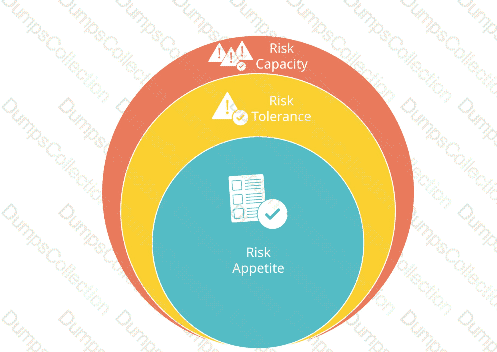
Risk Tolerance: This is specifically defined as the specified range of acceptable results or the degree, amount, or volume of risk that an organization or individual is willing to withstand. It represents a measurable threshold. For example, a project might have a budget tolerance of plus or minus 10%. If the risk threatens to exceed that 10%, it is beyond the organization ' s tolerance.
Risk Appetite (Option B): This is the degree of uncertainty an organization or individual is willing to accept in anticipation of a reward. It is a more general, high-level guiding principle or " hunger " for risk rather than a specific measurable volume of withstandable risk.
Risk Analysis (Option A): This is the process of examining identified risks to estimate the probability and impact. It is a step in the Risk Management process, not a measurement of the capacity to withstand risk.
Risk Response (Option D): This refers to the specific actions or strategies (such as Avoid, Transfer, Mitigate, or Accept) taken to address risks once they have been analyzed.
In the context of the Standard for Risk Management in Portfolios, Programs, and Projects, " Tolerance " acts as the measurable boundary for " Appetite. " Because the question specifically asks for the " degree, amount, or volume " that can be withstood, Tolerance is the most precise and verified term.
A team is feeling pressured to begin development work due to tight project deadlines. There are stakeholders with similar functions located in multiple countries. To accelerate the process, the business analyst has limited the requirements elicitation sessions to times that work for stakeholders in one time zone.
To reduce the risk with this approach, which step should the business analyst take?
Add the risk to the risk register so other stakeholders are aware of the approach.
Distribute the documented requirements to relevant stakeholders in all time zones for review and comment.
Ask the stakeholders in the elicitation sessions to speak on behalf of stakeholders in other time zones.
Request the project sponsor to approve this requirements elicitation approach for this project.
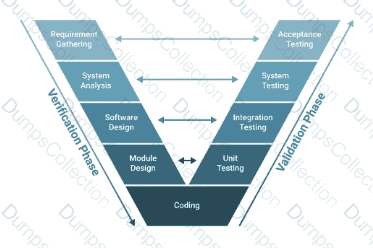
In the Collect Requirements process, as defined by the PMBOK® Guide and the PMI Guide to Business Analysis, missing the input of key stakeholders creates a significant risk of scope gaps and future rework. When project constraints (like tight deadlines and time zone differences) prevent synchronous collaboration, the Business Analyst (BA) must implement asynchronous strategies to ensure completeness.
Why Choice B is correct:
Asynchronous Elicitation: By distributing the documents to the excluded time zones, the BA allows those stakeholders to provide input, identify missing requirements, and correct misunderstandings on their own schedule.
Risk Mitigation: This directly addresses the risk of " missing requirements " by ensuring that stakeholders with " similar functions " in other countries have a voice, even if they couldn ' t attend the live sessions.
Validation: This serves as a secondary check to ensure that the requirements captured in one region are globally applicable, which is critical for an international project.
Analysis of other options:
A (Add to the risk register): While the BA should log this risk, simply recording it does not reduce the actual threat to the project ' s success. PMBOK® emphasizes active risk mitigation over passive documentation.
C (Ask stakeholders to speak on behalf of others): This is a high-risk approach. Even stakeholders with " similar functions " may have different local regulations, cultural nuances, or technical constraints. One region cannot accurately represent the specific needs of another without direct communication.
D (Request sponsor approval): Getting approval for a flawed process doesn ' t fix the flaw. The sponsor expects the BA to use professional judgment to gather accurate requirements; asking for permission to skip stakeholder groups is a failure of the BA’s core responsibility.
Key Concept: The Project Management Institute (PMI) highlights that " Requirements are the foundation of the WBS. " If the foundation is built on partial data, the entire project is at risk. Choice B is the most effective way to balance the need for speed with the necessity of thoroughness, ensuring that the Requirements Traceability Matrix eventually reflects the needs of the entire global stakeholder base.
Which project documents can determine the budget?
Procurement documents, contracts, requirements documentation, and basis of estimates
Basis of estimates, cost estimates, project schedule, and risk register
Business case, project charter, statement of work, and cost estimates
Scope baseline, resource management plan, activity list, and assumption log
According to the PMBOK® Guide, the Determine Budget process involves aggregating the estimated costs of individual activities or work packages to establish an authorized cost baseline. To do this accurately, the project manager must review specific project documents that provide the necessary data and context for those costs.
Basis of Estimates, Cost Estimates, Project Schedule, and Risk Register (Choice B): These are all primary Inputs to the Determine Budget process:
Cost Estimates: These provide the direct monetary requirements for each activity within a work package.
Basis of Estimates: This document provides the supporting detail behind the cost estimates, explaining how they were derived and what assumptions were made (e.g., current exchange rates, labor categories).
Project Schedule: The budget must be time-phased. The schedule contains the planned start and finish dates for activities, which determines when the funds will be expended.
Risk Register: This is reviewed to determine the necessary Contingency Reserves. Identified risks and their planned responses have associated costs that must be factored into the total budget.
Choice A: While Contracts and Procurement Documents are inputs, " Requirements Documentation " is a more indirect input. Choice B is more comprehensive regarding the core data needed to build the mathematical baseline.
Choice B: The Business Case and Project Charter are higher-level documents usually used during project initiation. While they provide the " ceiling " for the budget, they do not provide the granular data required to determine the detailed budget during the planning phase.
Choice D: The Scope Baseline is a critical input, but the Resource Management Plan and Activity List are typically used to create the cost estimates in the previous process (Estimate Costs). By the time you are determining the budget, you are using the outputs of those earlier steps.
By aggregating these specific documents, the project manager creates the Cost Baseline, which is the approved version of the time-phased project budget, excluding any management reserves.
Which Define Activities output extends the description of the activity by identifying the multiple components associated with each activity?
Project document updates
Activity list
Activity attributes
Project calendars
In accordance with the PMBOK® Guide (Project Schedule Management), specifically within the Define Activities process, Activity Attributes serve as an extension of the activity list. While the activity list provides the names of the tasks, the activity attributes provide the detailed information required for scheduling and resource management.
Function and Components: Activity attributes identify the multiple components associated with each activity. This includes, but is not limited to:
Activity Identifiers (IDs) and codes.
Predecessor and Successor activities, including leads and lags.
Resource requirements and constraints.
Logical relationships (Finish-to-Start, Start-to-Start, etc.).
Imposed dates and assumptions.
Evolution of Detail: During the initial stages of the project, these attributes are limited. As the project progresses through Progressive Elaboration, the attributes become more detailed, providing the necessary data for the Sequence Activities and Develop Schedule processes.
Relationship to Activity List: The activity list is a documented tabulation of schedule activities, whereas the attributes provide the " meta-data " or descriptive depth for each item on that list.
Analysis of Distractors:
A. Project document updates: While the Define Activities process can result in updates to various project documents (such as the risk register), this is a general category of output and does not specifically describe the detailed components of an activity.
B. Activity list: This is a primary output of Define Activities, but it is merely a list of the schedule activities. It does not " extend the description " with multiple components in the way that the Activity Attributes do.
D. Project calendars: These are typically an output of the Develop Schedule process. They identify working days and shifts available for scheduled activities and are not a description of the activities themselves.
Tools and techniques used for Plan Communications include the communication:
requirements analysis, communication technology, communication models, and communication methods.
methods, stakeholder register, communication technology, and communication models.
requirements, communication technology, communication requirements analysis, and communication methods.
management plan, communication technology, communication models, and communication requirements analysis.
According to the PMBOK® Guide, specifically within the Plan Communications Management process, the project manager identifies the information needs of the stakeholders and defines a communication approach. The specific tools and techniques used to develop this plan are:
Communication Requirements Analysis: This technique determines the specific information needs of project stakeholders. This includes considering the number of potential communication channels using the formula $n(n-1)/2$.
Communication Technology: This refers to the specific tools, systems, or methods used to transfer information among stakeholders (e.g., conversations, written documents, online databases, or websites).
Communication Models: These are descriptions, metaphors, or graphical representations that show how communication processes are performed (e.g., the basic sender-receiver model involving encoding, transmitting, decoding, and noise).
Communication Methods: These are the systematic procedures used to share information. They are categorized into Interactive (multidirectional), Push (sent to specific recipients), and Pull (used for large volumes of information where recipients access content at their own discretion).
Comparison with Other Options:
B. methods, stakeholder register, communication technology, and communication models: The Stakeholder Register is an Input to the process, not a tool or technique.
C. requirements, communication technology, communication requirements analysis, and communication methods: " Communication requirements " is the result or an input factor, but " Communication Requirements Analysis " is the actual technique.
D. management plan, communication technology, communication models, and communication requirements analysis: The Communication Management Plan is the Output of this process, not a tool or technique used to create it.
An input to the Perform Integrated Change Control process is:
expert judgment
seller proposals
the project charter
the project management plan
According to the PMBOK® Guide, the Perform Integrated Change Control process is the process of reviewing all change requests; approving changes and managing changes to deliverables, organizational process assets, project documents, and the project management plan; and communicating the decisions.
Role of the Project Management Plan: The Project Management Plan is a primary input because it contains the baselines (scope, schedule, and cost) and the change management plan. To evaluate the impact of a change request, the Change Control Board (CCB) or the project manager must compare the request against the established plan to see how it affects the project ' s objectives.
Specific Components Used:
Change Management Plan: Provides the direction for managing the change control process and documents the roles and responsibilities of the Change Control Board (CCB).
Configuration Management Plan: Describes how the items of the project are identified and defined.
Scope, Schedule, and Cost Baselines: Used to assess the impact of changes on the project ' s overall performance.
Comparison with other options:
A. Expert judgment: This is a Tool and Technique used during the process to evaluate the technical and management implications of the change, not an input.
B. Seller proposals: These are typically inputs to the Conduct Procurements process, where the organization evaluates bids from potential vendors.
C. The project charter: This is the output of the Develop Project Charter process and is used as an input to the Develop Project Management Plan and Identify Stakeholders processes. It is generally too high-level to serve as the functional baseline for Integrated Change Control.
Project governance refers to framework.......which of the following is a portfolio?
Pioject governance refers lo framework, functions, and processes that guide project management activates with a defined hierarchy between projects, programs and poctfotos. According to this hierarchy, which ot Die following is a portfolio?
A portfolio is a group of projects, programs, subsidiary portfolios and operations managed together to achieve strategic objectives.
A portfolio is the mam project of the company, supervised directly by the CEO.
A portfolio is a group of projects managed by the same project manager.
A portfolio is a group of related proiecls, programs, subsidary portfolios, and operation*, thai provides similar products or services.
According to the PMBOK® Guide and the Standard for Portfolio Management, a portfolio is a high-level component of the organizational hierarchy designed to bridge the gap between strategy and execution.
Strategic Objectives (Choice A): This is the correct definition. A portfolio is a collection of projects, programs, subsidiary portfolios, and operations managed as a group to achieve strategic objectives. The components of a portfolio are not necessarily related or interdependent; their common denominator is that they all contribute to the organization ' s high-level strategic plan and compete for the same limited organizational resources.
Main Project/CEO (Choice B): A portfolio is not a " main project, " nor is it defined by who supervises it. While a CEO or a Portfolio Review Board may oversee a portfolio, the definition rests on the nature of the work (strategic grouping) rather than the job title of the supervisor.
Same Project Manager (Choice C): Managing multiple projects together simply because they share a project manager does not make them a portfolio. This is more likely a workload management situation. A portfolio is defined by strategic alignment, not by administrative assignment.
Related Projects/Similar Services (Choice D): This definition is closer to Program Management. Programs consist of related projects managed in a coordinated way to obtain benefits. Portfolio components do not need to be related or provide similar services; for example, a construction company ' s portfolio might include a " Hospital Building Project " and a " Company-wide IT Upgrade, " which are unrelated but both strategically vital.
The Portfolio Management process ensures that an organization can prioritize its investments and ensure that the projects and programs being executed are the ones most likely to deliver the intended business value and strategic goals.
Which of the following is an input to Control Scope?
Project schedule
Organizational process assets updates
Project document updates
Work performance information
According to the PMBOK® Guide, the Control Scope process is the process of monitoring the status of the project and product scope and managing changes to the scope baseline. To perform this process accurately, several components of the project management plan and various project documents are required as inputs.
While it may seem counterintuitive, the Project Schedule is a formal input to Control Scope because scope and schedule are inextricably linked.
Baseline Alignment: The schedule shows when specific deliverables (scope) are expected to be completed.
Impact Analysis: When a scope change is proposed or a variance is detected, the project manager must refer to the schedule to see how the change in work volume affects the timeline.
Integrated Control: In the PMI framework, you cannot effectively control scope without understanding the temporal constraints in which that scope must be delivered.
B. Organizational process assets updates: This is an output of the Control Scope process. After the process is performed, any new procedures or " lessons learned " regarding scope control are used to update the organization ' s assets.
C. Project document updates: This is a common output of almost all monitoring and controlling processes. As variances are found or changes are approved, documents like the Requirements Traceability Matrix or the Stakeholder Register may need to be updated.
D. Work performance information: This is an output of the Control Scope process. The input is Work Performance Data (raw observations). Once that data is compared against the scope baseline, it becomes " information " (e.g., " The project is currently 10% over-scoped " ).
The primary inputs defined by PMI for this process are:
Project Management Plan: Including the Scope Management Plan, Requirements Management Plan, Change Management Plan, Configuration Management Plan, Scope Baseline, and Schedule Baseline.
Project Documents: Such as Lessons Learned Register, Requirements Documentation, and the Requirements Traceability Matrix.
Work Performance Data: Raw data on which deliverables have been started, their progress, and which have been finished.
Organizational Process Assets: Policies and procedures for scope control.
Which process involves defining, preparing, and coordinating all subsidiary plans and integrating them into a comprehensive plan?
Direct and Manage Project Work
Develop Project Management Plan
Plan Quality Management
Monitor and Control Project Work
According to the PMBOK® Guide and the Standard for Project Management, the process of defining, preparing, and coordinating all subsidiary plans and integrating them into a comprehensive project management plan is Develop Project Management Plan.
As per PMI standards, this process is part of the Project Integration Management Knowledge Area and occurs within the Planning Process Group. The Project Management Plan is the primary document used to manage the project. Key characteristics of this process include:
Integration: It consolidates all subsidiary management plans (e.g., Scope, Schedule, Cost, Quality, Resource, Communications, Risk, Procurement, and Stakeholder Management Plans) and baselines (Scope, Schedule, and Cost baselines) into a unified whole.
Consolidation: It defines how the project is executed, monitored, controlled, and closed.
Baselines: It establishes the performance measurement baselines against which project execution will be measured.
Updates: The Project Management Plan is a " living document " that is updated and revised through the Perform Integrated Change Control process as the project progresses.
The other options are incorrect based on the following PMI process definitions:
Direct and Manage Project Work: This is an Executing process. It involves leading and performing the work defined in the project management plan and implementing approved changes to achieve the project ' s objectives.
Plan Quality Management: This is a Planning process, but it is a " subsidiary " process. It focuses specifically on identifying quality requirements and standards; its output (the Quality Management Plan) is an input to the Develop Project Management Plan process.
Monitor and Control Project Work: This is a Monitoring and Controlling process. It involves tracking, reviewing, and reporting the overall progress to meet the performance objectives defined in the project management plan.
As per the PMI Lexicon of Project Management Terms, the Develop Project Management Plan process ensures that all aspects of the project are aligned and that the project manager has a clear, integrated roadmap for success.
What is an emerging practice in stakeholder engagement?
Confirming that all identified stakeholders are engaged and actually affected by the work
Assuring that team leadership is primarily involved in stakeholder engagement
Ensuring that stakeholders do not change after stakeholder identification
Ensuring that stakeholders most affected by the work are involved as collaborative team partners
According to the PMBOK® Guide, specifically the Project Stakeholder Management knowledge area, the concept of stakeholder engagement has evolved from simply " managing " people to actively " engaging " them as critical components of the project ' s success.
Collaborative Partnerships: An emerging practice in this field is moving beyond traditional communication and toward co-creation or collaborative partnerships. This involves inviting stakeholders who are most affected by the work—such as end-users, customers, or local communities—to participate as partners.
Benefits of Collaboration: When stakeholders are treated as partners rather than just recipients of information, the project benefits from:
Higher quality requirements.
Reduced resistance to change.
Increased trust and transparency.
Better alignment between the project ' s output and the actual needs of the users.
Agile Influence: This practice is heavily influenced by Agile methodologies, which emphasize customer collaboration over contract negotiation and ensure that the " voice of the customer " is present throughout the entire development lifecycle.
Why other options are incorrect:
Option A: Confirming all stakeholders are engaged and actually affected: This is a standard activity within the Identify Stakeholders and Monitor Stakeholder Engagement processes. It is a fundamental requirement of project management, not an " emerging practice. "
Option B: Assuring team leadership is primarily involved: Effective engagement is the responsibility of the entire project team, not just leadership. Emerging trends actually encourage decentralized engagement, where team members interact directly with their counterparts in the stakeholder organization.
Option C: Ensuring stakeholders do not change: Stakeholders are dynamic and will change throughout the project life cycle. Attempting to keep them static is unrealistic and counterproductive to the Identify Stakeholders process, which should be performed continuously.
In which Knowledge Area is the project charter developed?
Project Cost Management
Project Scope Management
Project Time Management
Project Integration Management
According to the PMBOK® Guide and the Standard for Project Management, the project charter is developed within the Project Integration Management Knowledge Area. Specifically, this occurs during the Develop Project Charter process, which is the very first process in the Initiating Process Group.
As per PMI standards, Project Integration Management includes the processes and activities to identify, define, combine, unify, and coordinate the various processes and project management activities. The Project Charter is a critical element of this Knowledge Area because:
Authorization: It is the document issued by the project initiator or sponsor that formally authorizes the existence of a project and provides the project manager with the authority to apply organizational resources to project activities.
Alignment: It establishes a direct link between the project and the strategic objectives of the organization.
High-Level Boundaries: It documents high-level information such as the project purpose, measurable objectives, high-level requirements, overall project risk, and summary milestone schedule.
The other options are incorrect based on the following PMI Knowledge Area definitions:
Project Cost Management: This Knowledge Area is concerned with planning, estimating, budgeting, financing, funding, managing, and controlling costs so that the project can be completed within the approved budget. It uses the charter as an input, but does not create it.
Project Scope Management: This area focuses on ensuring the project includes all the work required, and only the work required. Like Cost Management, it uses the high-level boundaries defined in the charter to begin the Plan Scope Management and Collect Requirements processes.
Project Time Management: (Now referred to as Project Schedule Management) This area focuses on the timely completion of the project. It relies on the summary milestone schedule found in the project charter to develop the detailed schedule.
As per the PMI Lexicon of Project Management Terms, the Develop Project Charter process is essential for ensuring that the project manager and the performing organization are officially recognized and empowered to begin the planning phase.
Tailoring considerations for project scope management may include:
requirements management, stability of requirements, development approach, and validation and control.
WBS guidelines, requirements templates, deliverable acceptance forms, and verified deliverables.
business needs, product descriptions, project restrictions, and project management plan.
issues defining and controlling what is included in the project, vended deliverables, and quality reports.
According to the PMBOK® Guide, tailoring is the deliberate adaptation of project management processes, inputs, tools, techniques, outputs, and life cycle phases to make them fit the specific project environment. For Project Scope Management, the guide identifies four specific tailoring considerations:
Knowledge and Requirements Management: Does the organization have systems in place for managing requirements? Are there formal or informal requirements management tools?
Stability of Requirements: How stable are the requirements? If requirements are highly unstable and expected to evolve, an adaptive/agile approach is more appropriate than a predictive one.
Development Approach: Does the project use a predictive, iterative, incremental, or agile/adaptive approach? The method used to build the product significantly changes how scope is defined and managed.
Validation and Control: What is the organization’s culture regarding validation and control? Are there formal sign-off procedures, or is it handled through informal stakeholder reviews?
Analysis of Other Options:
B. WBS guidelines, requirements templates, deliverable acceptance forms, and verified deliverables: These are Organizational Process Assets (OPAs) or specific outputs/tools. While they are part of the process, they are not the high-level considerations used to decide how to tailor the scope management processes.
C. Business needs, product descriptions, project restrictions, and project management plan: These are standard inputs to many planning processes (like the Project Charter or Scope Statement), but they do not represent the strategic tailoring factors for the Scope Management knowledge area.
D. Issues defining and controlling what is included in the project, vended deliverables, and quality reports: These describe operational issues or components of different processes (Quality, Procurement), rather than the framework for tailoring scope management.
Lessons learned documentation is gathered during which of the following Project Management Process Groups?
Planning
Executing
Closing
Initiating
According to the PMBOK® Guide, the formal gathering, ritualization, and archiving of lessons learned documentation is a primary activity of the Closing Process Group (specifically within the Close Project or Phase process).
While modern project management encourages the continuous recording of lessons learned throughout the project lifecycle (to the Lessons Learned Register), the formalization of these documents for the benefit of the organization occurs during Closing.
Final Archive: During the Closing phase, the project manager reviews all previous documentation to ensure that all " knowledge gained " is finalized.
Organizational Process Assets (OPAs): The primary output of this activity is an update to the Corporate Knowledge Base. This ensures that future project managers can benefit from the successes and failures of the current project.
Administrative Closure: This involves documenting the reasons for any deviations from the original plan and the effectiveness of the risk responses implemented.
A. Planning: This group focuses on defining the course of action. While you might review lessons learned from past projects here, you are not yet gathering them for the current project.
B. Executing: During execution, the team is performing the work. While the Lessons Learned Register (a project document) is updated during execution, the " Lessons Learned Documentation " as a formal project closure deliverable is a function of the Closing group.
D. Initiating: This group is for authorizing the project. At this stage, there is no project performance to reflect upon or document.
In the most recent editions of the PMBOK® Guide, there is a distinction between:
Lessons Learned Register: An active document used throughout the project (Executing/Monitoring).
Lessons Learned Repository: The final resting place for the documentation after the project is closed (Closing).
For the purpose of this examination, the act of " gathering " the final documentation for organizational use is strictly tied to the Closing of the project or phase.
During a virtual kick-off session, the project sponsor highlights the significance of the project to the company. What message should be conveyed to the team in this meeting?
Bonuses based on accomplishment criteria
New working contract with more benefits
Promotion opportunities with this project
Assignment of key roles and responsibilities
According to the PMBOK® Guide and the PMI Standard for Project Management, the Kick-off Meeting is a vital event that typically occurs at the end of planning and the start of execution. Its primary purpose is to communicate the project objectives, gain team commitment, and explain the roles and responsibilities of each stakeholder.
Why Choice D is correct: While the sponsor provides the " big picture " (strategic significance), the team needs functional clarity to begin work. The Assignment of key roles and responsibilities ensures that every team member understands their expectations and how they contribute to the significant goals mentioned by the sponsor. This is often documented in a Responsibility Assignment Matrix (RAM), such as a RACI chart. Defining " who does what " prevents duplication of effort and ensures accountability from day one.
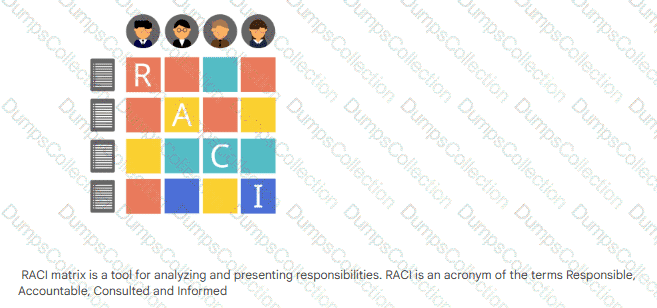
Analysis of other options:
A, B, and C: While bonuses, contracts, and promotions (Rewards and Recognition) are part of Resource Management, they are generally handled through HR or private 1-on-1 discussions between the Project Manager and functional managers. Discussing individual personal gain (bonuses or promotions) as the primary message during a kick-off meeting can distract from the project ' s collective mission and goals.
The Project Management Institute (PMI) emphasizes that a successful kick-off session should align the team around a common vision. Assigning roles (Choice D) provides the structure necessary to transform that vision into actionable results.
The key benefit of the Monitoring and Controlling Process Group is the ability to:
establish and manage project communication channels, both external and internal to the project team.
influence the stakeholders that want to circumvent integrated change control so that their changes are implemented.
monitor the ongoing project team against the team performance assessments and the project performance baseline.
observe and measure project performance regularly and consistently to identify variances from the project management plan.
According to the PMBOK® Guide, the Monitoring and Controlling Process Group consists of those processes required to track, review, and orchestrate the progress and performance of the project.
The core philosophy of this process group is " Plan vs. Actual. " It acts as the project ' s feedback loop.
Measurement: It involves collecting Work Performance Data (raw observations) and converting it into Work Performance Information (analyzed data).
Variance Analysis: By comparing the current status against the Project Performance Baselines (Scope, Schedule, and Cost), the project manager can identify where the project is drifting.
Actionable Insight: Once a variance is identified, the project manager can determine if a Change Request (corrective or preventive action) is necessary to bring the project back in line with the plan.
A. establish and manage project communication channels...: This is primarily a function of the Planning (Plan Communications Management) and Executing (Manage Communications) process groups. While Monitoring and Controlling includes Monitor Communications, its " key benefit " is broader than just communication.
B. influence the stakeholders that want to circumvent integrated change control...: This is fundamentally incorrect. The project manager ' s goal is to ensure stakeholders follow the integrated change control process, not to help them circumvent it.
C. monitor the ongoing project team against the team performance assessments...: This is a specific activity within the Manage Team process (Executing) and Monitor Resources (Monitoring and Controlling). While important, it is a subset of project performance, not the overarching key benefit of the entire process group.
Monitoring and Controlling occurs concurrently with Executing. As the team carries out the work, the project manager is constantly observing (Monitoring) and taking action to ensure the project stays within its defined boundaries (Controlling). This ensures that the project does not deviate so far from the plan that it becomes impossible to recover.
Which type of contract is most commonly used by buying organizations because the price for goods is set at the outset and is not subject to change unless the scope of work changes?
Fixed Price with Economic Price Adjustments Contract (FP-EPA)
Cost-Reimbursable Contract (CR)
Firm-Fixed -Price Contract (FFP)
Fixed-Price-Incentive-Fee Contract (FPIF)
According to the PMBOK® Guide, specifically within the Plan Procurement Management process, different contract types are used depending on the nature of the project and the level of risk the buyer or seller is willing to assume.
The Firm-Fixed-Price Contract (FFP) is the most common type of contract used by most buying organizations.
Fixed Price at Outset: In an FFP contract, the price for goods or services is set at the beginning and is not subject to change unless the scope of work changes (usually via a formal change order).
Risk Allocation: This contract type places the greatest amount of risk on the seller. If the seller ' s costs increase during the performance of the contract, the buyer is not obligated to pay more. The seller is legally obligated to complete the work at the agreed-upon price.
Administrative Effort: For the buyer, FFP contracts require the least amount of auditing and oversight compared to cost-reimbursable contracts, as the primary focus is on the quality and timeliness of the deliverables rather than the seller ' s internal costs.
Suitability: This is best used when the product or service is well-defined and the specifications are unlikely to change significantly.
Analysis of other choices:
Choice A (Fixed Price with Economic Price Adjustments - FP-EPA): This is a fixed-price contract that allows for pre-defined adjustments to the contract price due to changed conditions, such as inflation or cost increases for specific commodities. It is used for multi-year projects but is not the " most common " general-purpose contract.
Choice B (Cost-Reimbursable - CR): In this type, the buyer pays the seller for actual costs incurred plus a fee (profit). This places the risk on the buyer, as the final cost is not fixed at the outset.
Choice D (Fixed-Price-Incentive-Fee - FPIF): This allows for some flexibility by giving the buyer and seller the ability to share in cost savings or overruns based on a pre-determined formula. While it has a price ceiling, it is more complex than a standard FFP.
How can a project manager determine if the project activities comply with organizational and project policies, processes, and procedures?
Look at the quality metrics.
Validate the scope.
Review the quality checklist.
Conduct a quality audit.
According to the PMBOK® Guide (6th Edition), the primary tool used to determine if project activities comply with organizational and project policies, processes, and procedures is a Quality Audit. This is a key tool and technique of the Manage Quality process (often referred to as Quality Assurance).
A quality audit is a structured, independent process used to determine if project activities comply with organizational and project policies, processes, and procedures. The objectives of a quality audit include:
Identifying all good and best practices being implemented.
Identifying all nonconformity, gaps, and shortcomings.
Sharing good practices introduced or implemented in similar projects in the organization and/or industry.
Proactively offering assistance in a positive manner to improve the implementation of processes to help the team raise productivity.
Highlighting contributions of each audit in the lessons learned repository of the organization.
Analysis of Distractors:
A (Look at the quality metrics): Quality metrics are an input or a measurement standard (e.g., number of defects, on-time performance). While they tell you what to measure, simply looking at them does not constitute a formal review of " compliance with policies and procedures. "
B (Validate the scope): This is a Monitoring and Controlling process focused on the formalized acceptance of the completed project deliverables by the customer or sponsor. it is about the " correctness " of the deliverable relative to the scope, not process compliance.
C (Review the quality checklist): A quality checklist is a structured tool used to verify that a set of required steps has been performed. While it helps in maintaining consistency, it is a component used during the work. A formal determination of overall organizational compliance is handled by the broader " Audit " function.
Which process includes prioritizing risks for subsequent further analysis or action by assessing and combining their probability of occurrence and impact?
Perform Qualitative Risk Analysis
Perform Quantitative Risk Analysis
Plan Risk Management
Plan Risk Responses
According to the PMBOK® Guide, the process of Perform Qualitative Risk Analysis is the process of prioritizing individual project risks for further analysis or action by assessing their probability of occurrence and impact, as well as other characteristics.
Key Function: This process focuses on the subjective evaluation of risks. It allows project managers to reduce the level of uncertainty and focus on high-priority risks.
Methodology: It involves the use of a Probability and Impact Matrix to assign a risk rating (e.g., Low, Medium, High). This prioritization is essential because it identifies which risks require a more detailed Quantitative Risk Analysis (Choice B) or immediate Risk Response Planning (Choice D).
Efficiency: By combining probability and impact, the project team can effectively categorize risks and allocate resources to manage the most critical threats or opportunities first.
Analysis of other choices:
Choice B (Perform Quantitative Risk Analysis): This process numerically analyzes the combined effect of identified individual project risks and other sources of uncertainty on overall project objectives. It usually follows Qualitative analysis.
Choice C (Plan Risk Management): This is the process of defining how to conduct risk management activities for a project; it sets the " rules, " but does not assess the risks themselves.
Choice D (Plan Risk Responses): This is the process of developing options, selecting strategies, and agreeing on actions to address overall project risk exposure, which occurs after the risks have been prioritized.
Which input to the Manage Stakeholder Engagement process provides guidance on how stakeholders can best be involved in a project?
Feedback analysis
Stakeholder analysis
Communication management plan
Stakeholder management plan
According to the PMBOK® Guide and the Standard for Project Management, the Stakeholder Management Plan (referred to in the most recent editions as the Stakeholder Engagement Plan) is the primary input to the Manage Stakeholder Engagement process that provides the strategy for involving stakeholders.
As per PMI standards, the Stakeholder Management Plan is a formal document that identifies the management strategies required to effectively engage stakeholders. It provides specific guidance on:
Desired and current engagement levels: Identifying where stakeholders are (e.g., Unaware, Resistant, Neutral, Supportive, or Leading) and where the project needs them to be.
Scope and impact of stakeholder change: How the project affects stakeholders and vice versa.
Engagement strategies: Specific activities and approaches for involving stakeholders based on their power, interest, and influence.
The other options are incorrect based on their specific roles within the PMI framework:
Feedback analysis: This is a Tool and Technique (Data Analysis) used in the Monitor Stakeholder Engagement process to evaluate information received from stakeholders, rather than an input providing guidance for engagement.
Stakeholder analysis: This is a Tool and Technique used during the Identify Stakeholders and Plan Stakeholder Engagement processes to create the plan; it is not the plan itself.
Communication management plan: While this plan describes how information will be distributed (the " what, when, and how " ), the Stakeholder Management Plan focuses on the why and the behavioral strategies to ensure stakeholders are appropriately involved and supportive.
As per the PMI Lexicon of Project Management Terms, the Stakeholder Management Plan ensures that stakeholders are involved at the right time and in the right way to foster support and minimize resistance.
When executing a project, a recently hired subject matter expert (SME) who reviewed the execution progress remarked that the schedule could be crashed and that the schedule was not assessed properly. What should the project manager do next?
Update the schedule baseline
Review the schedule baseline
Initiate a change request
Update the risk register
According to the PMBOK® Guide, specifically the Monitor and Control Project Work and Control Schedule processes, a Project Manager must validate information before taking corrective or preventive actions.
Validation First: When a new Subject Matter Expert (SME) provides feedback that a schedule was " not assessed properly, " the Project Manager’s first responsibility is to verify the accuracy of this claim. The PM cannot act on an opinion without first performing a technical Review of the Schedule Baseline.
Schedule Crashing Analysis: Crashing is a schedule compression technique used to shorten the duration for the least incremental cost by adding resources. Before crashing, the PM must review the baseline to identify the Critical Path. Crashing only works on critical path activities; crashing non-critical activities provides no benefit to the project end date.
Integrity of the Baseline: A baseline is a formal, approved version of the schedule. It should not be changed (Option A) or modified via a change request (Option C) until a thorough analysis proves that a change is necessary and beneficial.
Professional Judgment: By reviewing the baseline with the SME, the PM can determine if the original assumptions were flawed or if the SME has identified a legitimate opportunity to optimize the project timeline.
Analysis of other options:
Option A: Updating the schedule baseline is a premature step. A baseline is only updated after a Change Request has been formally approved by the Change Control Board (CCB).
Option C: Initiating a change request is a " doing " step. You cannot justify a change request until you have conducted the Review (Option B) to understand the impact on cost, scope, and resources.
Option D: While the SME ' s feedback might suggest a risk, the primary issue raised is about the current assessment and optimization of the schedule. Updating the risk register is a secondary administrative task that follows the technical review of the schedule itself.
Per PMI standards, when new technical expertise suggests an error or opportunity in project planning, the Project Manager must first Review the Schedule Baseline to perform an impact analysis and validate the findings before taking further action.
After winning a large government contract, a company needs to hire a portfolio manager What vital qualification should candidates possess?
Ability to manage strategic goals across multiple projects
Skills to manage a large project
Competency to manage multiple projects that align departments
Capability of managing project schedules
According to The Standard for Portfolio Management and the PMBOK® Guide, the role of a portfolio manager is distinct from that of a project or program manager. The primary focus of portfolio management is strategic alignment.
Portfolio Management Definition: A portfolio is defined as projects, programs, subsidiary portfolios, and operations managed as a group to achieve strategic objectives. Therefore, the most vital qualification for a portfolio manager is the ability to ensure that the collection of components aligns with the organization ' s high-level strategy and maximizes business value.
Strategic Alignment: While a project manager focuses on " doing the work right " (tactical), a portfolio manager focuses on " doing the right work " (strategic). They must balance resource allocation and prioritize components based on how they contribute to the government contract ' s overarching goals.
Analysis of other options:
Skills to manage a large project (Option B): This describes a Project Manager. Large scale does not change the fundamental nature of project management, which is focused on specific deliverables.
Competency to manage multiple projects that align departments (Option C): This is more indicative of Program Management. Programs involve a group of related projects managed in a coordinated way to obtain benefits not available from managing them individually.
Capability of managing project schedules (Option D): This is a fundamental technical skill for a Project Manager or a Project Scheduler, but it is too narrow for a portfolio-level role.
In the context of a large government contract, the portfolio manager must navigate competing priorities across various programs and projects to ensure the entire investment satisfies the strategic requirements of the government client.
You've reached the limit of preview questions.
Register now to access more real PMI CAPM exam questions for free!

TESTED 12 Oct 2026